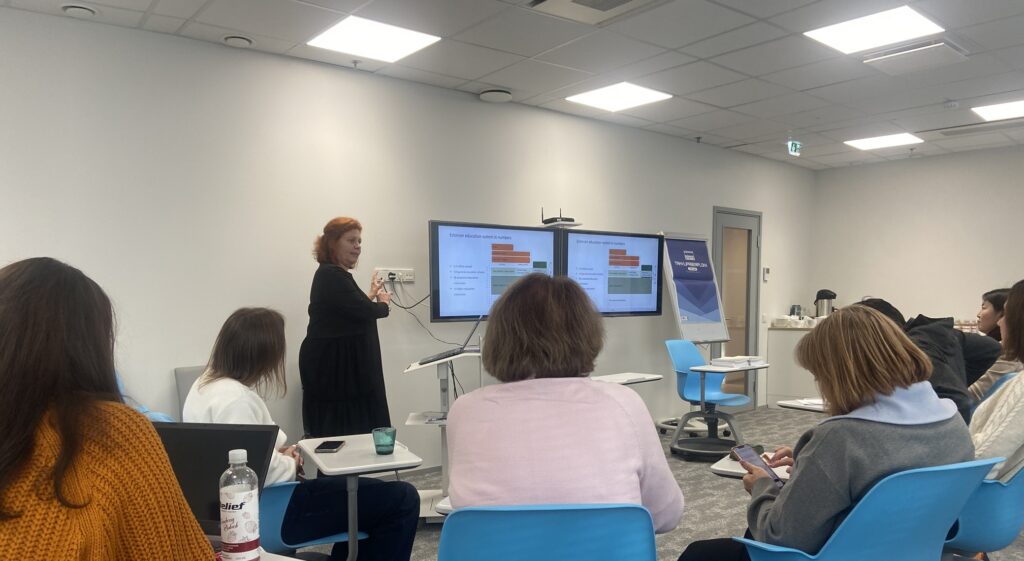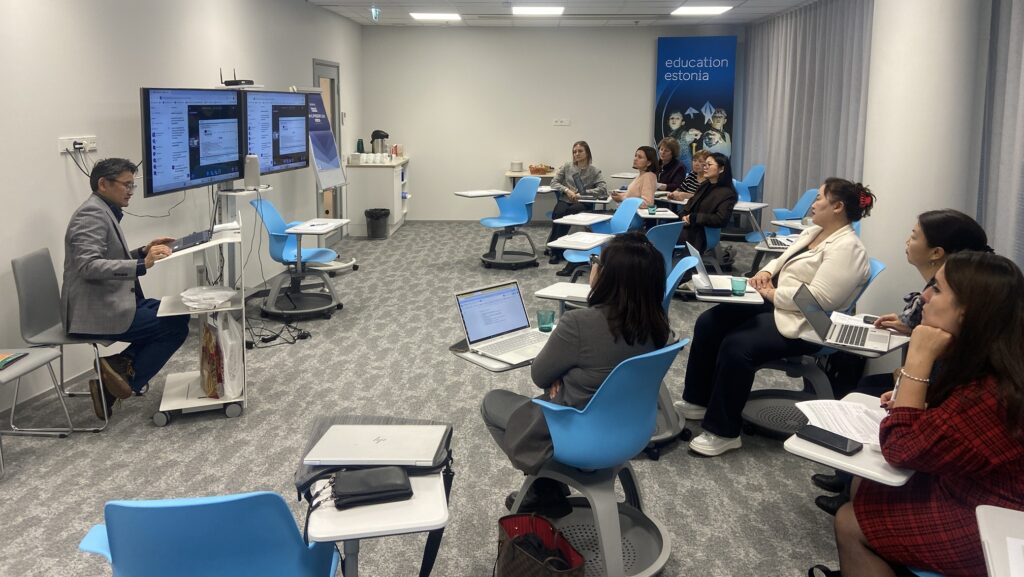
The DOMANI consortium organised an international training session and consultation on the management and provision of microcredentials from 27 to 29 October 2025 in Tallinn, Estonia. The event was co-organised by the Estonian University of Life Sciences (EMU) and the Estonian Quality Agency for Education / Estonian Education and Youth Board (HARNO/HAKA), and hosted at HARNO premises in Tallinn.
The training brought together representatives from higher education institutions, national agencies, and industrial partners, supporting DOMANI’s capacity-building efforts under WP3 and contributing directly to Deliverable D3.4 and D7.
Training Overview
The training aimed to strengthen institutional and national capacities for microcredential development, management, and quality assurance in line with European Union and OECD approaches.
- Venue: Estonian Education and Youth Board (HARNO), A. H. Tammsaare tee 47, Tallinn
- Dates: 27–29 October 2025
- Format: International hybrid training and consultation
- Organisers: EMU & HARNO/HAKA
- Participants: 23 participants attended the training session
Objectives
- introducing international standards and quality frameworks for microcredentials
- discussing national regulatory developments in Estonia (including the Adult Education Act)
- strengthening capacity for curriculum design, assessment, and recognition of microcredentials
- exchanging good practices between universities, agencies, and industry
Agenda Highlights
The training programme combined institutional case studies, policy discussions, and expert workshops:
Day 1 (27 Oct)
- Introduction and welcome session
- Microcredential structure and curriculum at EMU
- Lifelong learning organisation in EMU and Estonia
Day 2 (28 Oct)
- Microcredential organisation and ICT at EMU
- Microcredential policy documents and international organisations (EU, UNESCO)
Day 3 (29 Oct) – Open Call Day
- OECD session: Assuring the Quality of Micro-credentials: Emerging Practice in OECD Countries
- HAKA Quality Team workshop: Adult Education Act, microcredentials, ISCED in adult training
- Curriculum structure, assessment criteria and common mistakes
- Case study: Micro-degrees and qualifications at Tallinn University of Technology (TalTech)
- Closing reflection
Key Discussion Points
Throughout the three days, participants explored practical and strategic topics including:
- Quality assurance frameworks: OECD shared comparative insights from 11 countries, highlighting transparency, digital verifiability, and stackability.
- National frameworks: HAKA explained how microcredentials are integrated into Estonia’s adult education system and qualification framework.
- Curriculum design: Partners discussed common design challenges such as fragmented learning outcomes, unclear workload, and weak assessment rubrics.
- Recognition and assessment: HAKA emphasised alignment with ECTS principles and the need for clear institutional recognition procedures.
- Institutional practice: TalTech shared its microcredential model and internal QA approach supporting modular learning and labour market relevance.
Follow-up actions
Following the training session, DOMANI partners agreed on several follow-up steps to ensure the training outcomes are implemented at institutional and national level:
- Share training materials and resources with all participants (presentations, reference materials, policy documents, evaluation forms).
- Integrate training insights into WP3 work, especially in relation to:
- curriculum design and assessment procedures for microcredentials
- institutional recognition mechanisms aligned with ECTS
- quality assurance templates and reporting approaches
- Develop follow-up capacity-building sessions responding to participant feedback, especially on:
- digital certification tools (e-certificates / digital badges)
- models for stronger industry engagement
- Encourage national coordination by exploring the creation of national microcredential networks, particularly in Ukraine and Mongolia.
The Tallinn training successfully fulfilled its objectives by strengthening shared understanding of microcredential systems and quality assurance practices. Participants gained practical tools and guidance for curriculum design and assessment aligned with EU and OECD standards.
The cooperation between EMU and HARNO ensured high-quality facilitation and created strong continuity for upcoming DOMANI WP3 activities.