DOMANI Summer School and Urban Hackathon for Green Transition Held in Mongolia (June 2025)
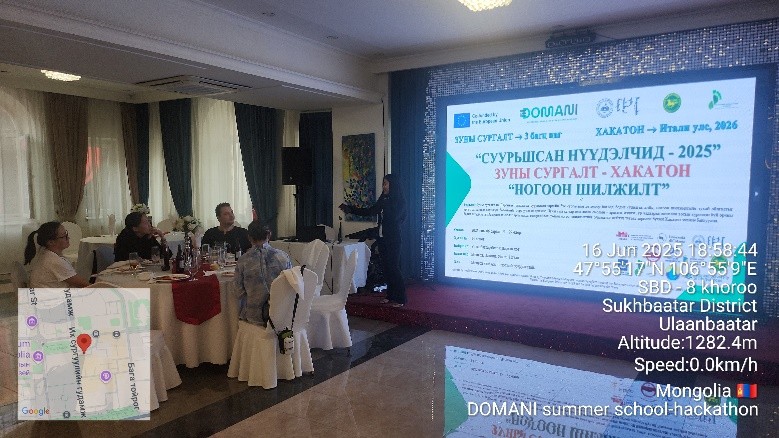
The DOMANI project successfully organised the “Settled Nomadism–2025” Summer School Programme and National Urban Hackathon for Green Transition in Mongolia in June 2025, bringing together students, academic staff, experts, and international partners for two weeks of intensive learning, fieldwork, and challenge-based innovation.
Hosted by the National University of Mongolia (NUM) and supported by DOMANI international partners from Estonia, Italy, and Hungary, the programme was held across Ulaanbaatar and Darkhan and focused on strengthening green transition competencies through interdisciplinary education and real-life environmental challenges.
- Dates: June 2025
- Location: Ulaanbaatar & Darkhan, Mongolia
- Coordinator and Main Organiser: National University of Mongolia (NUM)
- Format: Summer school + field-based learning + national urban hackathon
- Participants: 28 Students, researchers, and experts from DOMANI partner network
Programme Overview
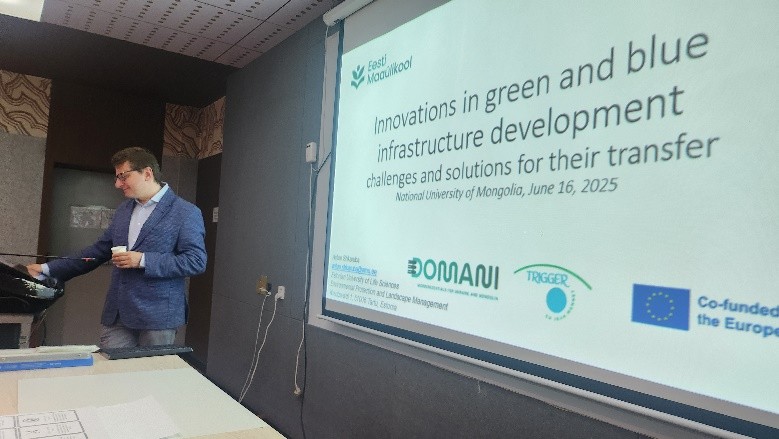
The summer school was designed to strengthen future-oriented learning under DOMANI by combining:
- interdisciplinary teaching and learning modules,
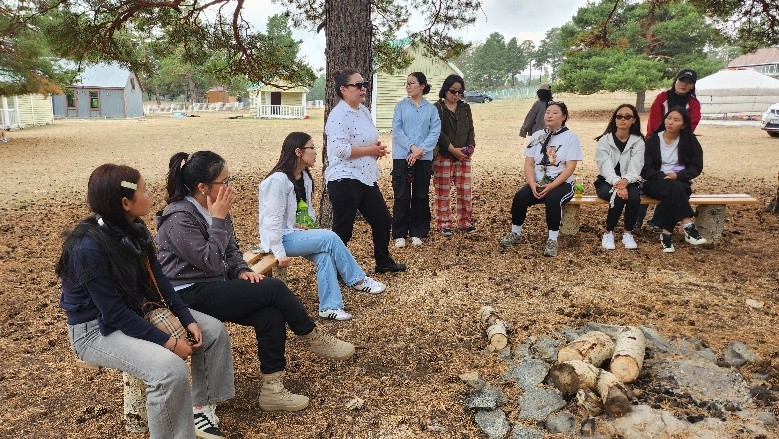
- field-based education,
- mentorship by international experts,
- and an innovation-focused hackathon format.
Participants explored key themes including:
- urban green transition
- resilience and ecosystem services/disservices
- green-blue infrastructure
- nature-based solutions
- real-life environmental issues (including management, policy and financial dimensions)
Urban Hackathon: Turning Challenges into Solutions
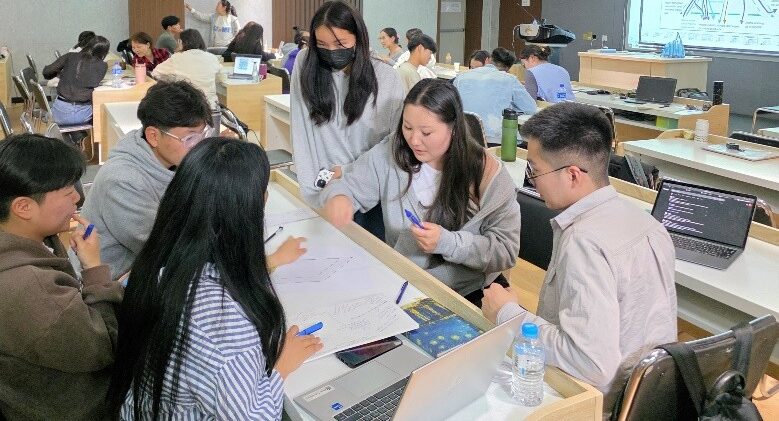
A key highlight of the programme was the Urban Hackathon, which ran over 4 days through three intensive stages and engaged 28 Mongolian student innovators.
The hackathon addressed major urban sustainability challenges in Ulaanbaatar, including:
- revitalising polluted and degraded river systems such as the Selbe River and Tuul River
- improving green space use and park management systems
- tackling the complex environmental and social issues of the ger district
Participants worked in teams to investigate problems, explore stakeholder perspectives, and develop solution proposals based on real-world observation and evidence.
Mentorship and International Collaboration
The hackathon teams were supported by an international mentorship structure. Students received in-person mentoring from:
- professors and experts from National University of Mongolia (NUM)
- international partners from Estonia and Italy
- the Center for Systems Innovation (CSI), Hungary
CSI mentored the team focusing on the privately funded experimental Misheel Park, examining its interaction with the Tuul River and developing future-oriented green transition visions. The mentoring process also included the use of new hackathon tools supporting structured teamwork and solution development.
Jury and Awards
An international jury evaluated the final team solutions and selected the winning proposals.
As a major outcome of the hackathon:
four outstanding students (from Ulaanbaatar and Darkhan) were awarded the opportunity to participate in the DOMANI International Summer School in Sicily (Italy) in 2026, hosted by the University of Catania.
The “Settled Nomadism–2025” Summer School and Urban Hackathon demonstrated how education can drive real green transition impact through practice-based learning, interdisciplinary teamwork, and international cooperation.
By connecting students with real urban environmental challenges and expert mentorship, the DOMANI programme empowered young innovators to move beyond theory and contribute to sustainability through actionable ideas and solutions.
Congratulations to all participants and mentors — the green transition is not just a concept, but action that starts with ideas like yours.