In line with the European approach to micro-credentials, SAEB and MULS successfully organised a comprehensive training programme to strengthen the capacity of academic and administrative staff to design, develop, and pilot micro-credential (MC) courses at the university level. The training supported participants in applying innovative, learner-centred, and flexible pedagogical approaches while ensuring quality assurance, institutional relevance, and sustainability beyond the project duration.
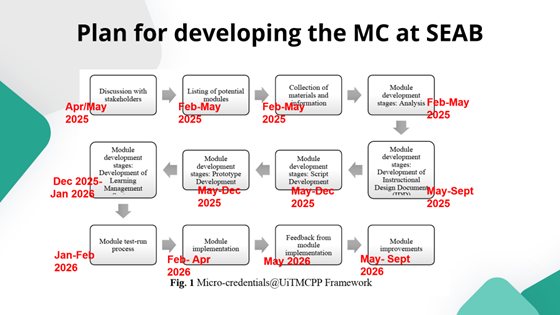
The training was structured into four interlinked phases, guiding participants step by step through the micro-credential course development process.
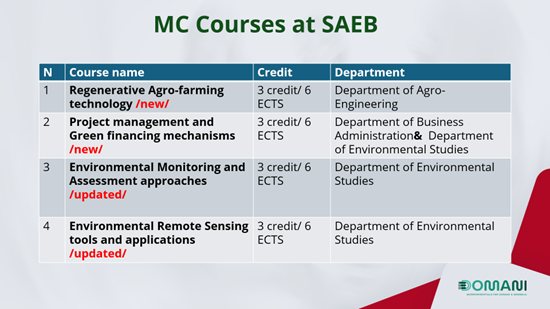
Phase 1: Micro-Credential Course Selection and Development Plan – January 30, 2025
The first phase focused on structured discussions and collaborative decision-making to finalise the selection of four micro-credential courses to be developed and piloted. Participants critically reviewed proposed course ideas against institutional priorities and their alignment with European micro-credential principles. This phase concluded with a clear development plan for the four pilot courses, setting a strong strategic foundation for the subsequent phases.
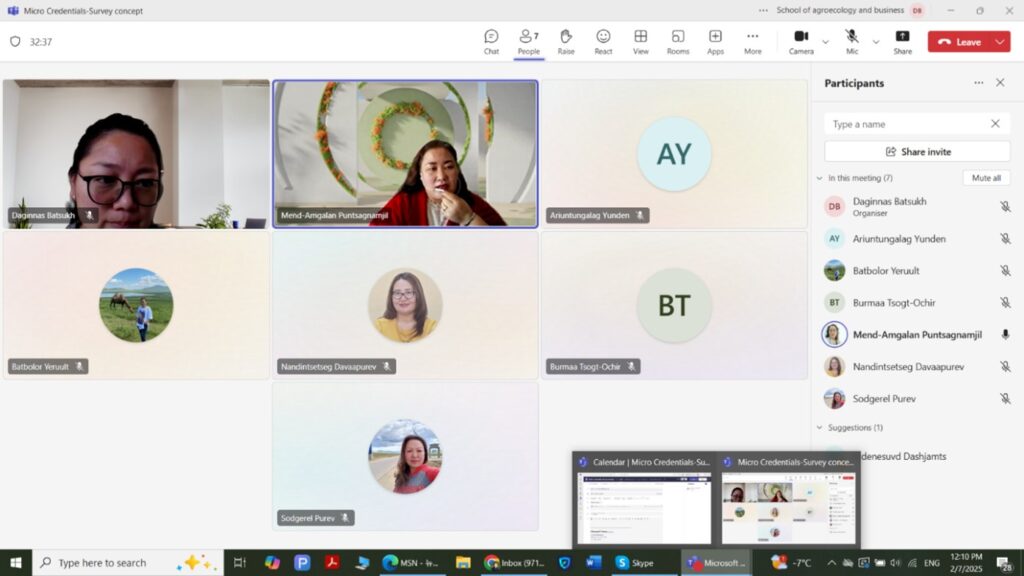
Phase 2: Micro-Credential Pilot Course Outline – February 07, 2025
Building on the initial planning, the second phase concentrated on the collaborative development of detailed outlines for each selected micro-credential course. Key elements such as learning outcomes, learner workload, assessment methods, and course structure were discussed in depth. Particular attention was given to integrating European and international micro-credential frameworks and good practices. The outputs of this phase served as the core basis for piloting the courses.
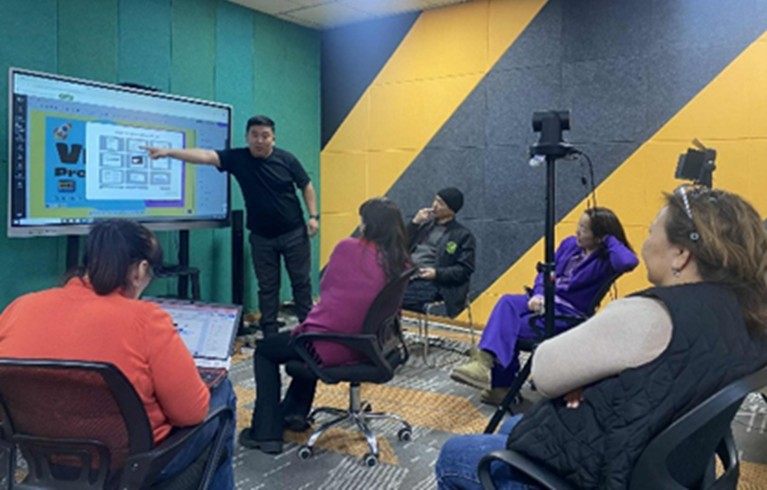
Phase 3: Application of Interactive and Digital Tools for MC Course Development – October 17, 2025
The third phase focused on enhancing the quality and flexibility of micro-credential courses through the use of interactive and digital tools. Participants explored a range of teaching and learning technologies aimed at increasing learner engagement in blended and online environments. Following a comparative review, Genially and VideoScribe were selected as the most suitable tools. Practical, hands-on exercises enabled academic staff to directly integrate these tools into their course designs.
Phase 4: Dissemination and Cross-Departmental Capacity Building – November 20, 2025
The final phase emphasised dissemination and institutional capacity building. Training sessions were delivered to academic staff from four professional departments, sharing practical knowledge on micro-credential development and interactive teaching methodologies. This phase fostered cross-departmental collaboration and contributed to the sustainability and scalability of the project’s results across the university.
The training was delivered in a blended format, combining online and in-person sessions to ensure flexibility, accessibility, and effective collaboration. Online sessions were conducted via Microsoft Teams, while face-to-face activities took place in a shared office space and the Innovative Pedagogical Center at SAEB, MULS.
Methodology development sessions in Phases 1 and 2 were facilitated by academic staff from the DOMANI project team. Interactive training sessions in Phases 3 and 4 were delivered by experts from the Innovative Pedagogical Center and IT specialists.
A total of 33 participants took part in the training, representing academic staff, project administration, instructional design, and IT support. Among them, 24 were female and 9 were male, reflecting strong multidisciplinary and inclusive engagement. Through this structured and collaborative training programme, the university has significantly strengthened its institutional capacity to design and deliver high-quality micro-credential courses aligned with European standard.
Posted on the The DOMANI project Facebook group: https://www.facebook.com/share/p/1beqxBLYCn/
Reported by:
Daginnas Batsukh, School of Agroecology and Business, Mongolian University of Life Sciences