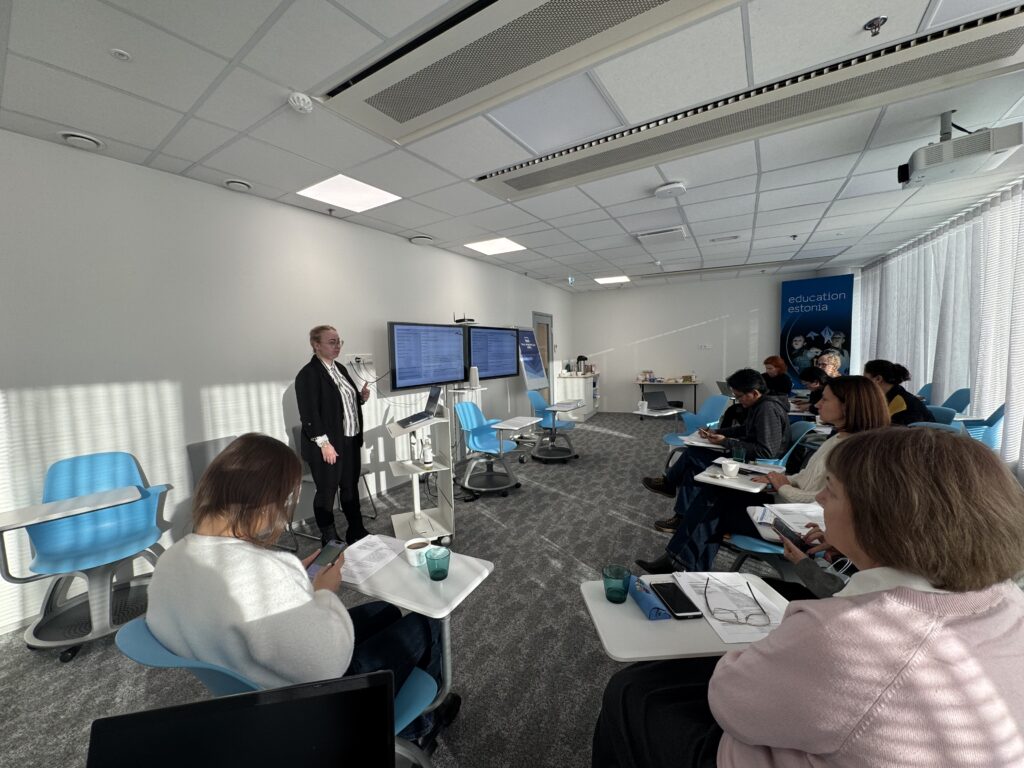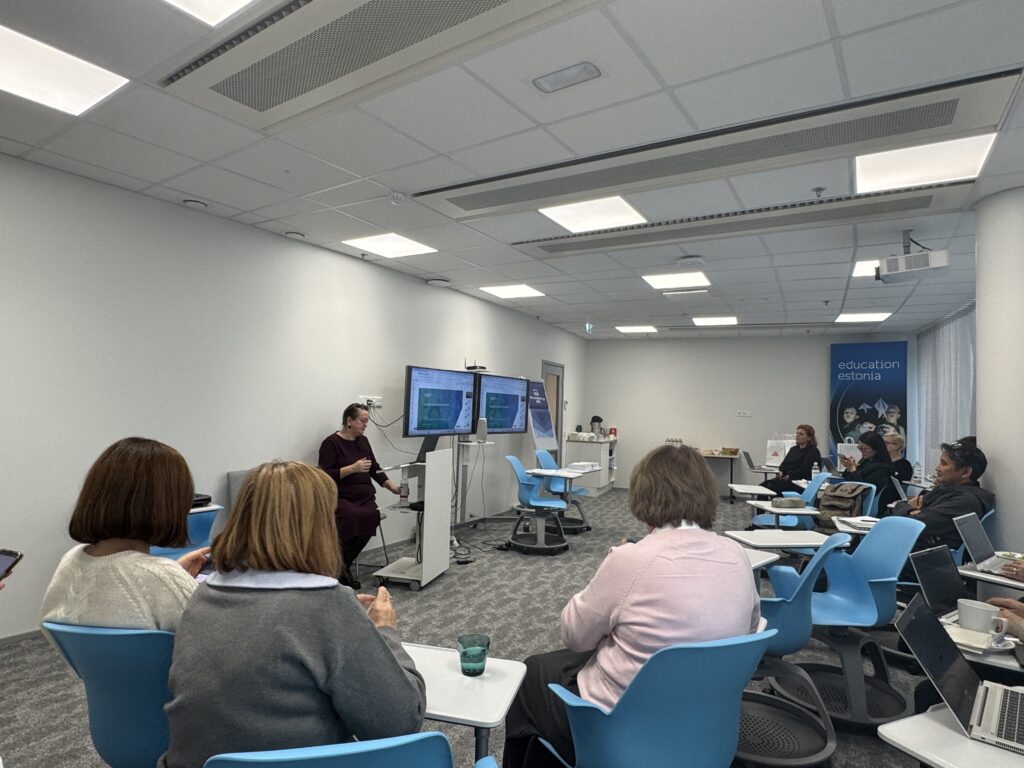
The DOMANI consortium successfully conducted a three-day international Training Session and Consultation on the Management and Provision of Microcredentials in Tallinn, Estonia. The event took place from 27–29 October 2025 and was co-organised by the Estonian University of Life Sciences (EMU) and the Estonian Quality Agency for Education / Estonian Education and Youth Board (HAKA).
The training formed part of DOMANI Work Package 3 and contributed to Deliverables D3.4 and D7, focusing on strengthening institutional and national capacities in Estonia, Ukraine, and Mongolia.
Event Overview:
-
Venue: Estonian Quality Agency for Education, Tallinn
-
Format: Hybrid (in-person & online)
-
Participants: 23 training participants; 19 participants in Steering Committee & Consortium meetings
-
Target group: HEI staff, national agencies, and industry representatives
Objectives:
The training aimed to enhance participants’ understanding of:
-
International quality standards for microcredentials (EU, OECD, UNESCO)
-
National frameworks and regulatory context in Estonia (Adult Education Act, ISCED)
-
Curriculum design, assessment, and recognition procedures
-
Good practices from higher education institutions and quality agencies
-
Collaboration among universities, QA bodies, and industry partners
Day 1-2 Highlights
-
Microcredential structure, curriculum design and ICT at EMU — Kristina Marran (EMU)
-
International policy frameworks for microcredentials — Ts. Burmaa (SAEB / MULS)
-
DOMANI Steering Committee & Consortium workshops (hackathon, mentorship programme, WP coordination)
-
Quality assurance of microcredentials in OECD countries — Simon Roy, OECD
-
HAKA workshops on Adult Education Act, ISCED, curriculum design and assessment
-
Case Study: Micro-degrees at TalTech — Hanno Tomberg (TalTech)
Kristina Marran, Coordinator, DOMANI Project
Estonian University of Life Sciences